


Longer than most of these posts so settle in, we’ll try to keep it fun.
A ship full of dying men
On May 20, 1747, James Lind, a Scottish naval surgeon, looked at a ship full of dying men. The crew of the HMS Salisbury had been out on patrol for months, with just one brief port stop. [1, 2]
Sailors too weak to stand, gums swollen and bleeding, old scars reopening. We now know this disease was scurvy, caused by a deficiency of vitamin C. And it caused more death than enemy fire. [3]
But back then they had no idea. Physicians still believed in the ancient theory of unbalanced humors and treatments like bloodletting. The word vitamin did not even exist in the English language until 1912. So they flailed helplessly in the fog with theories like bad air, damp weather, salted meat, even laziness.
On that day in 1747, James Lind decided to do something about it. Something sort of magical. Lind ran a primitive controlled clinical trial. He was literally a century ahead of his time.
He took 12 sailors and divided them into 6 groups of 2. He gave each of the 6 groups something different. One group got 2 oranges and a lemon every day. Another group got cider, another vinegar, and then a few other interventions for the other groups. [1]
Within a week one of the citrus sailors felt well enough to go back to full duty. The second citrus sailor felt well enough to nurse the others. The remaining 10 sailors in the other 5 intervention groups? They languished. [1]
Same ship. Same disease. Just one major difference: the intervention. That’s a controlled trial and James Lind ran one of the first in recorded human history.
Here’s what happened next.
Nothing.
Which, by the way, is where we are now on the prenatal vitamin association with autism, but more on that later.
The forty-eight year delay
The Royal Navy did not order lemon juice rations for every sailor until 1795. A full 48 years after Lind’s discovery. [2, 3]
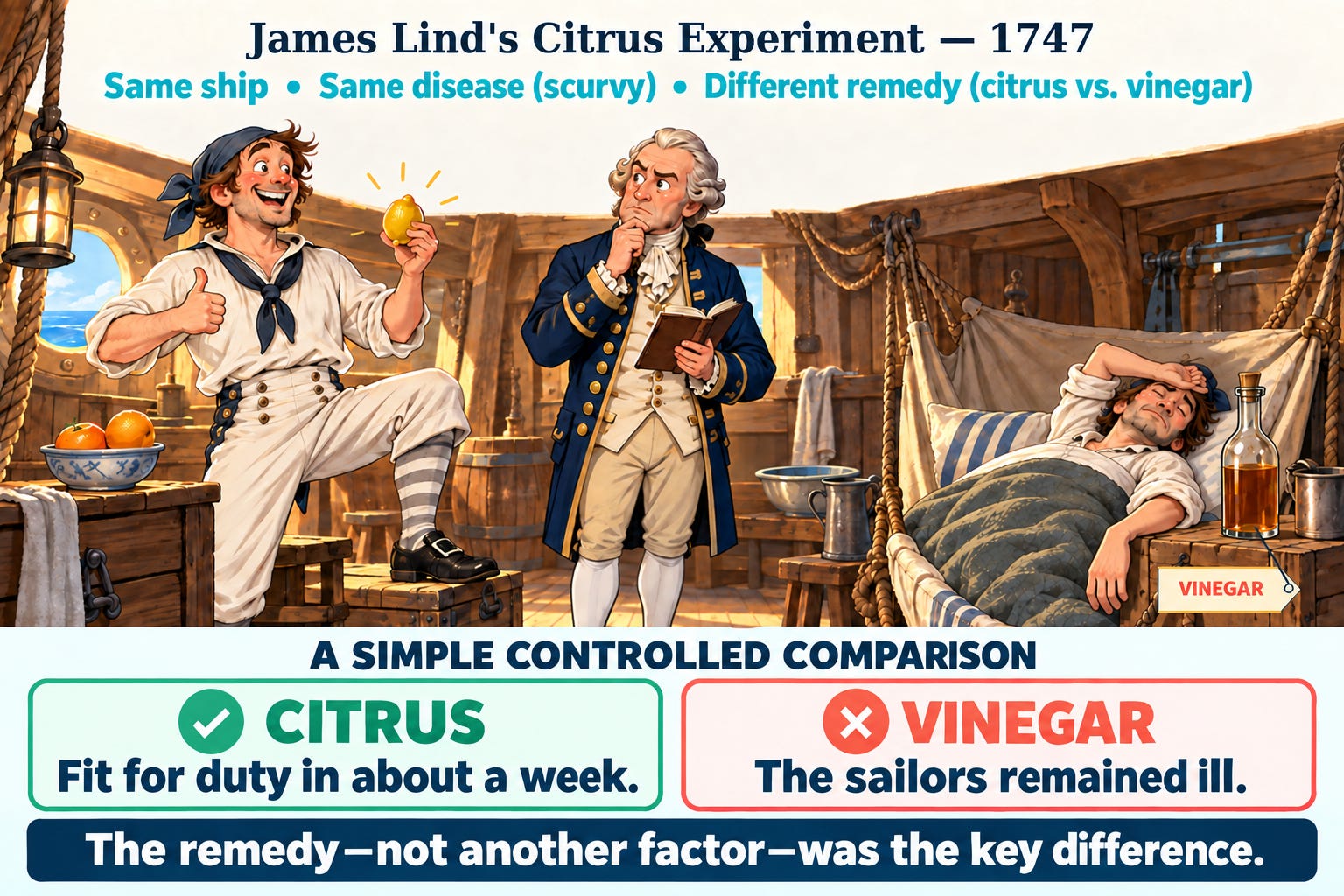
James Lind’s citrus experiment, 1747.
Part of the problem was James Lind himself. His write-up buried the citrus finding underneath other theories. Sometimes we get so caught up in “first principles” and understanding the “fundamentals”, that we forget to do what actually works. [2]
So how does this story relate to you? And your decision whether to take prenatal vitamins?
Well, I want this post to give you a deeper understanding. I don’t want to tell you to just trust me because I’m some sort of guru. I want to show you the evidence so you can make a truly informed decision.
James Lind’s experiment provides a great start. And an important lesson: Go with what works! Don’t wait half a century. Especially if the intervention is something as harmless as prenatal vitamins, or two oranges and a lemon.
The trap of the evidence snob
Some of us can be evidence snobs. My old self included, that is before I started a family.
The evidence snobs look at the hierarchy of scientific evidence pyramid. You can see a version of it here:
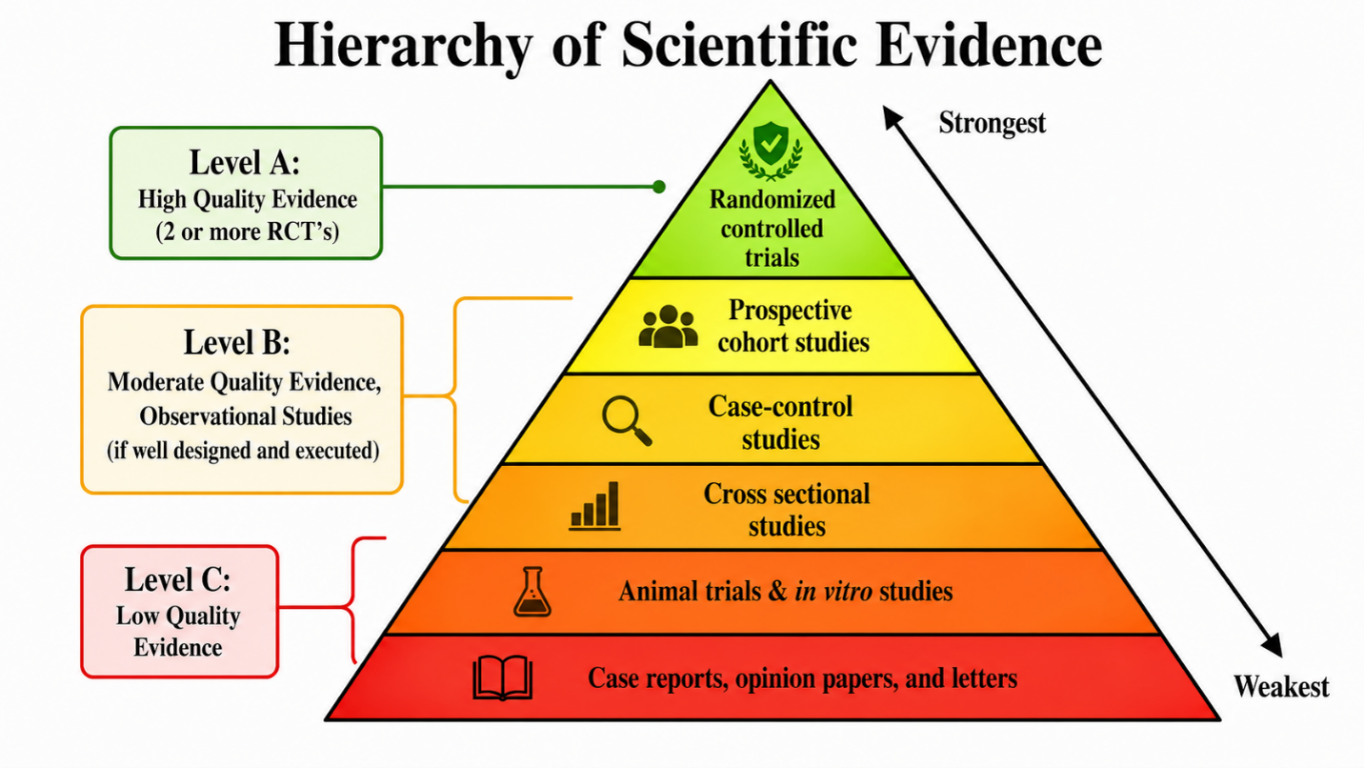
The hierarchy of scientific evidence.
And we the evidence snobs say: if the evidence is not the highest quality, the top of the pyramid, well then we couldn’t care less. I used that logic to make a big mistake for my own family. Back when we started our family, long standing high quality evidence backed up only one indication for prenatal vitamins: to prevent spina bifida (and other neural tube defects), which are rare. [4, 5] So as the doctor in the family I decided it was no big deal to skip the prenatal vitamin and just eat a little healthier. My obsession with helping others avoid that mistaken logic became this Substack, but that’s a topic for another day.
You may have heard the saying: “correlation does not imply causation”. And I always thought people were so smart when they said that. It’s another way of demanding only the best of the best evidence. But they never really get around to telling you what proves causation. And why for some interventions we can never prove causation; we can never scale to the top of the pyramid.
Why a coin flip beats a smart doctor
So why is a randomized controlled trial (RCT) so powerful? Well, it builds on the experiment run by James Lind, except we have made some advancements since then.
Instead of James Lind deciding which individual goes in which treatment arm, we now have a computer randomly make that decision. Sort of like a digital coin flip. Generally, we have two groups. One gets the intervention, say a prenatal vitamin. And the other group gets a placebo, something inert like a sugar pill. Then usually we “blind” the patients and doctors about who is getting what. And finally, we measure the outcome, say spina bifida. Here is a graphic explaining all of this, in case you learn better visually:
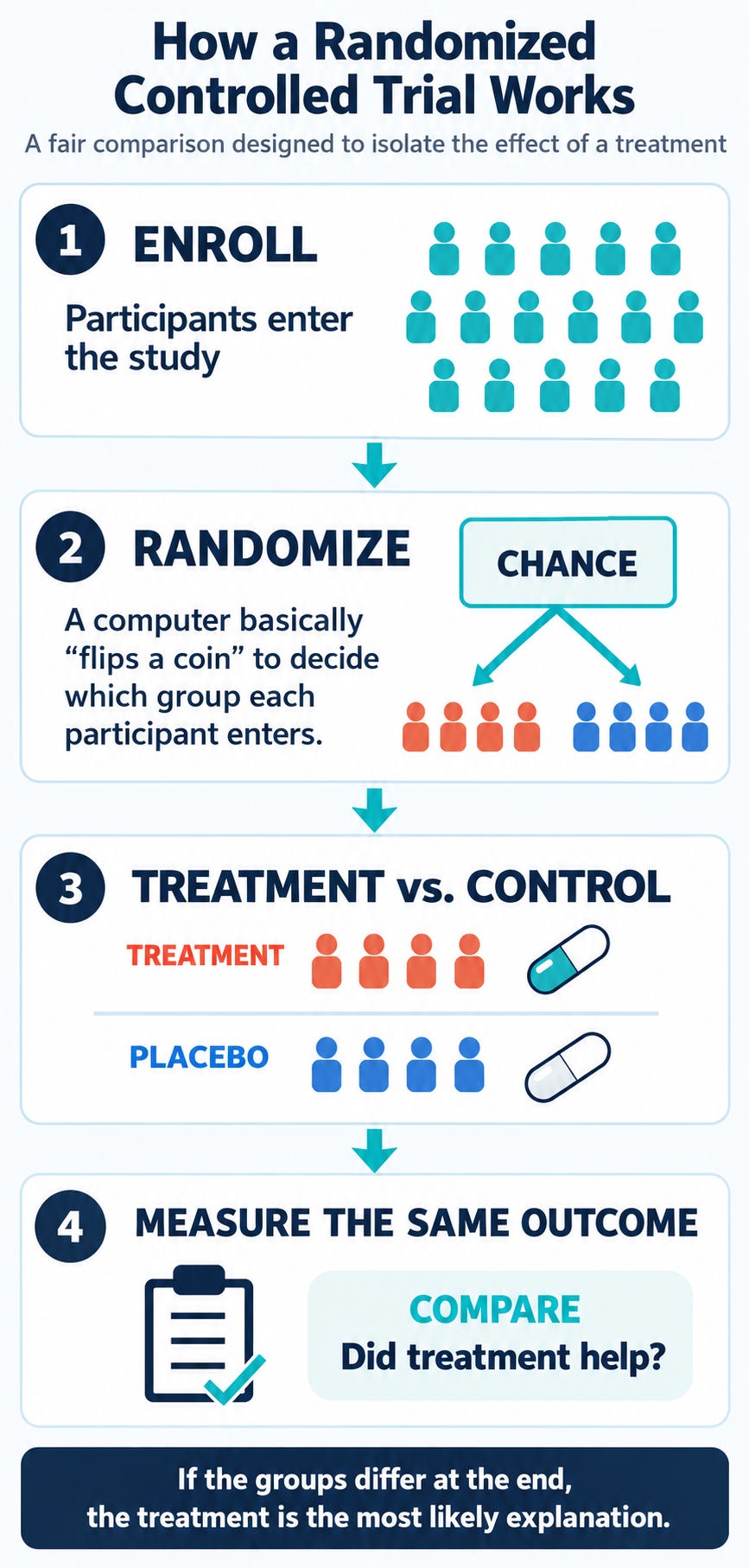
How a randomized controlled trial works.
This study was actually done. Behind the Iron Curtain, in the country of Hungary of all places. About 2,000 women started a prenatal with folic acid before pregnancy. About 2,000 more took a placebo. In the prenatal folate arm, there were literally zero cases of spina bifida or other neural tube defects. That is zero out of 2,000 pregnancies, more or less. In the placebo arm, there were 6 cases. [6] Published 1992 in the hallowed New England Journal of Medicine, a big deal. A simple vitamin, folate (vitamin B9), prevented what can be a devastating birth defect, kind of like vitamin C did for scurvy.
The Hungarian trial was the second large, definitive RCT. So we could say as of 1992 that folic acid caused a reduction in the rate of spina bifida. Two or more quality randomized controlled trials proving causation is the closest thing we have to a general consensus on causation. Having two or more quality RCTs is the gold standard of evidence. The promised land. [4, 6]
If you’re really interested, this graphic explains why a randomized controlled trial is such a powerful form of evidence (or you can skip this semi-side track and move on to the next paragraph):
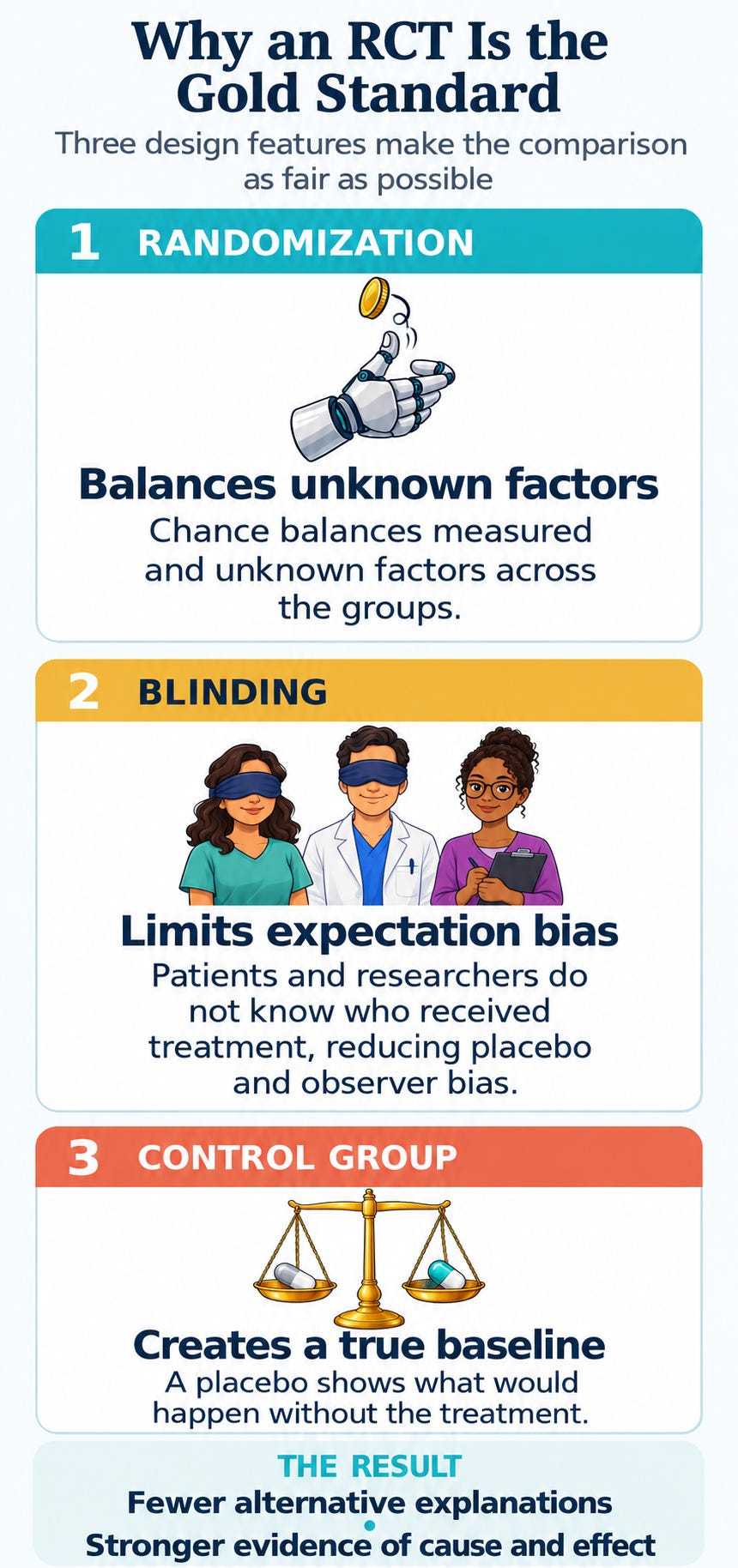
Why a randomized controlled trial is the strongest design.
The trial that closed the door
Now this Hungarian RCT was in some ways both a blessing and a curse. Can you see why? As of 1992, we can no longer test prenatal folate against placebo for other outcomes. How could we randomly withhold prenatal folate from half the study participants when we know it’s beneficial to prevent spina bifida? Ethically, we cannot. So it’s almost impossible to prove prenatal folate prevents anything else, other than spina bifida. Now, hopefully you can understand why prenatal vitamins have so little gold standard evidence to back up their benefit.
So what else can we do, now that placebo controlled RCTs are effectively off the table? Let’s take another look at the hierarchy of evidence pyramid:
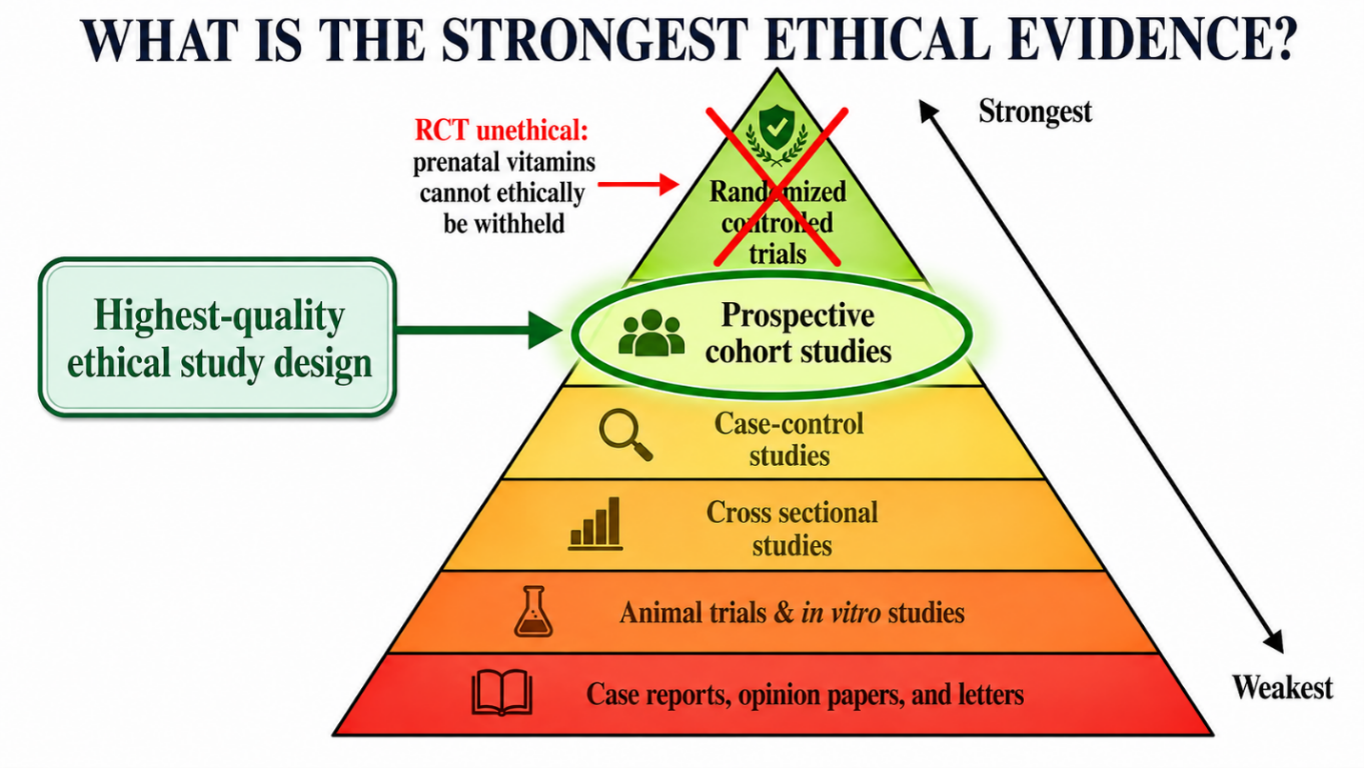
Once prenatal vitamins cannot be withheld, prospective cohort studies become the strongest evidence available.
What we do when a trial is off the table
The next highest level of evidence: prospective cohort studies. Sounds intimidating but it’s pretty simple. Prospective just means forward looking. Cohort just means group. So it’s basically following a group of people going forward in time.
You can see how it works visually here:
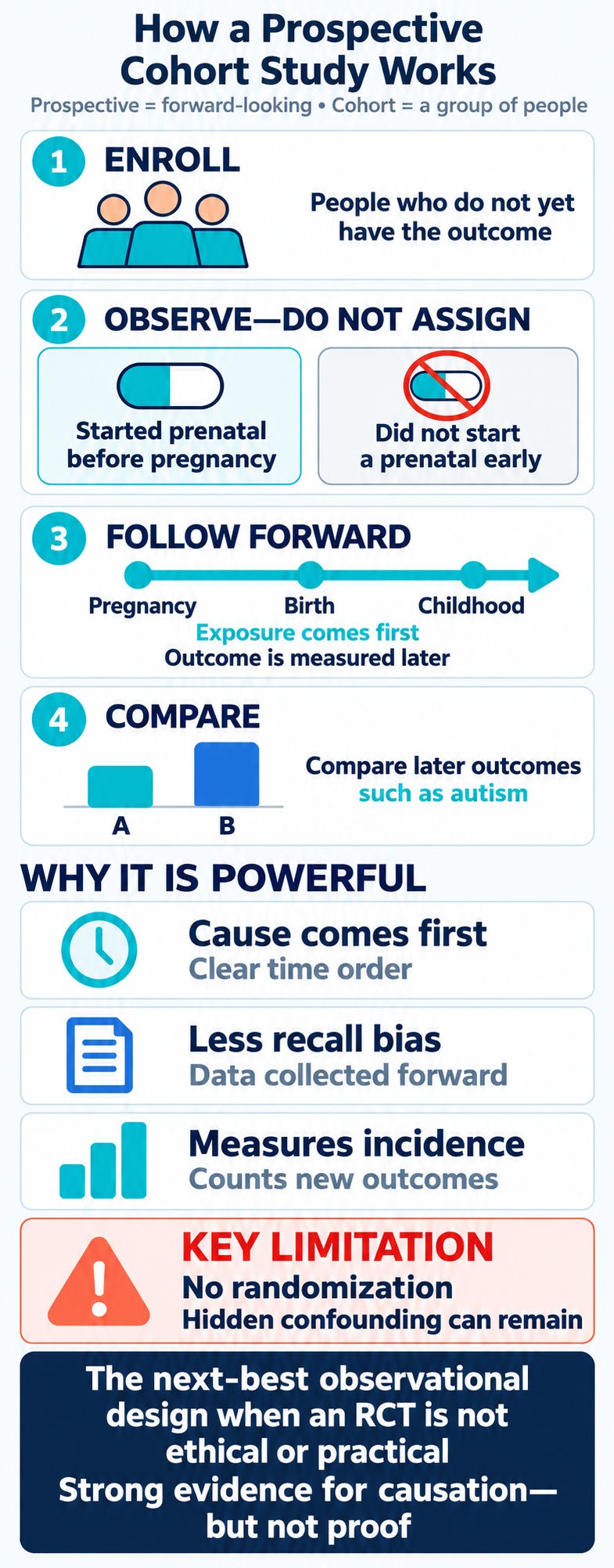
How a prospective cohort study works.
Prospective cohort studies are ethical because the researchers do not withhold something beneficial like prenatal vitamins. Instead, the patients make that choice, to take a prenatal or not, of their own free will and then we just follow them going forward and measure outcomes.
The biggest issue with prospective cohort studies: confounding. Let’s look at a real world example. Massive prospective cohort studies found an alarming observation: coffee intake was associated with higher rates of lung cancer. But no need for alarm. [7, 8]
Because guess what else heavy coffee drinkers tend to do? Chain smoke! And in fact, it was the smoking that caused the higher rate of lung cancer, not the coffee.
How do we know? When they took the smokers out of the dataset, the association between coffee drinking and lung cancer essentially disappeared. Heavy coffee drinkers who did not smoke had no significant increase in the rate of lung cancer. That’s how we know that smoking was the confounding factor and the real cause, not the coffee. [7, 8]
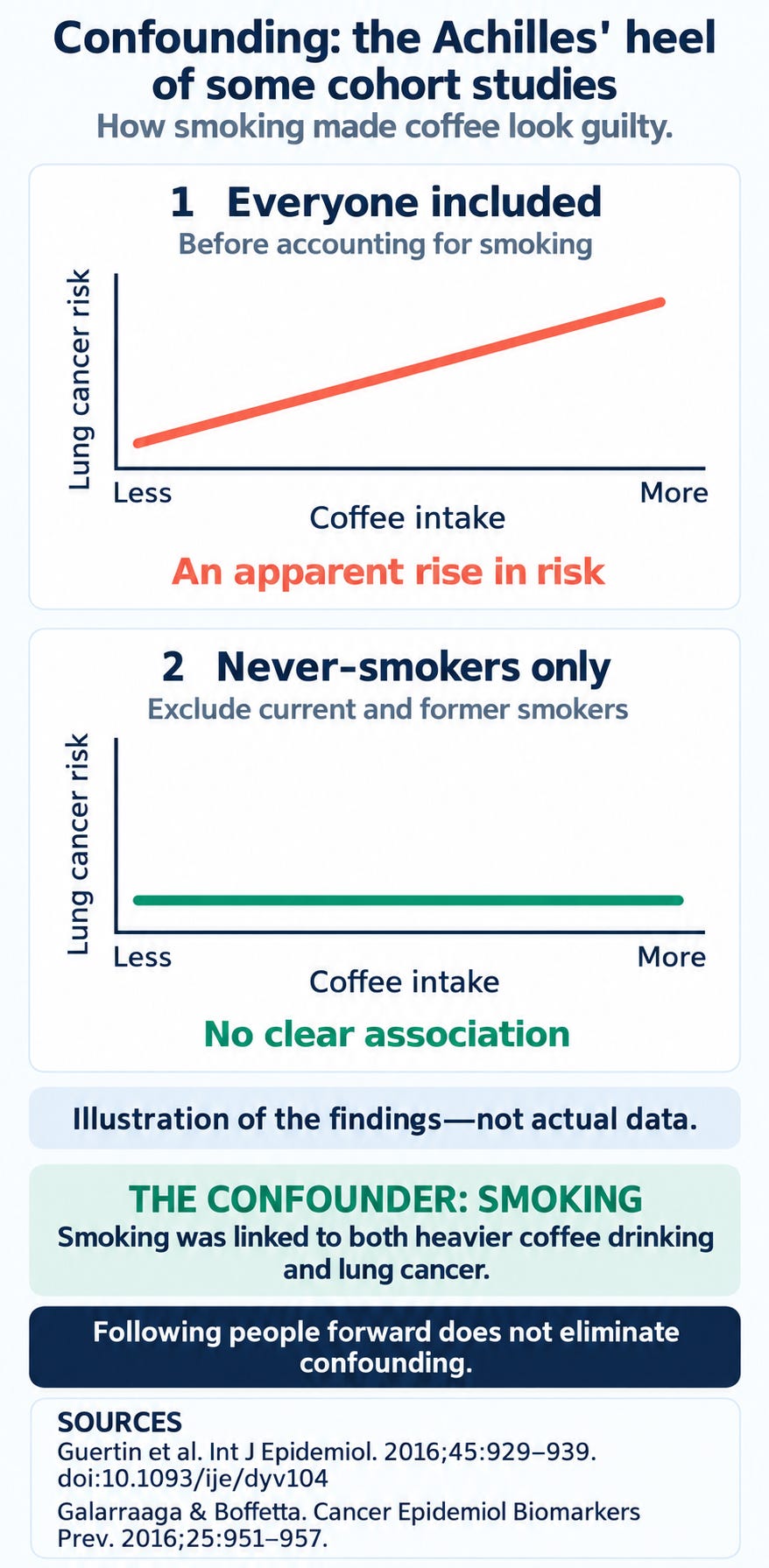
Confounding in a prospective cohort study.
Even for the coffee drinkers who smoked, the researchers were able to adjust for the smoking, which caused the coffee lung cancer association to essentially disappear once again. It sounds complicated but it’s really not, so stay with me. Let’s say smoking a pack a day causes 20x higher rates of lung cancer based on previous research we’ve done. If heavy coffee drinkers who also smoke a pack a day have a 20x higher rate of lung cancer then we know it’s likely not the coffee because the rate didn’t go up with smoking plus coffee. Now, if the heavy coffee drinkers who smoked a pack a day had a 50x higher rate of lung cancer, then we’d worry that coffee was a contributing cause, but that’s not what the data showed. [7, 8] So enjoy your Starbucks. These adjustments are called multivariable regression, such as Cox proportional hazards, and they’re much more commonly done than pulling people out of the data sets. Nearly all prospective cohort studies include these adjustments because they get us closer to causation.
However, we can never really know every confounder. What if the confounding factor is an undiscovered gene, or something else we can’t see? So prospective cohort studies can usually only give us moderate quality evidence. You can essentially never reach the top of the pyramid, the promised land, with prospective cohort studies alone.
But moderate quality evidence is often the best we can do. The highest quality RCTs are often impractical, too expensive, unethical. Remember placebo controlled RCTs with prenatal vitamins have been off the table since 1992 because they’re unethical. In fact, almost everything your doctor recommends is based on moderate quality evidence at best. Even for cardiology, one of the most heavily researched areas in medicine, less than 10% of US guidelines are based on high quality evidence. I was shocked to read that number. Over 90% are based on moderate quality evidence or even lower. [9] See the summary here:
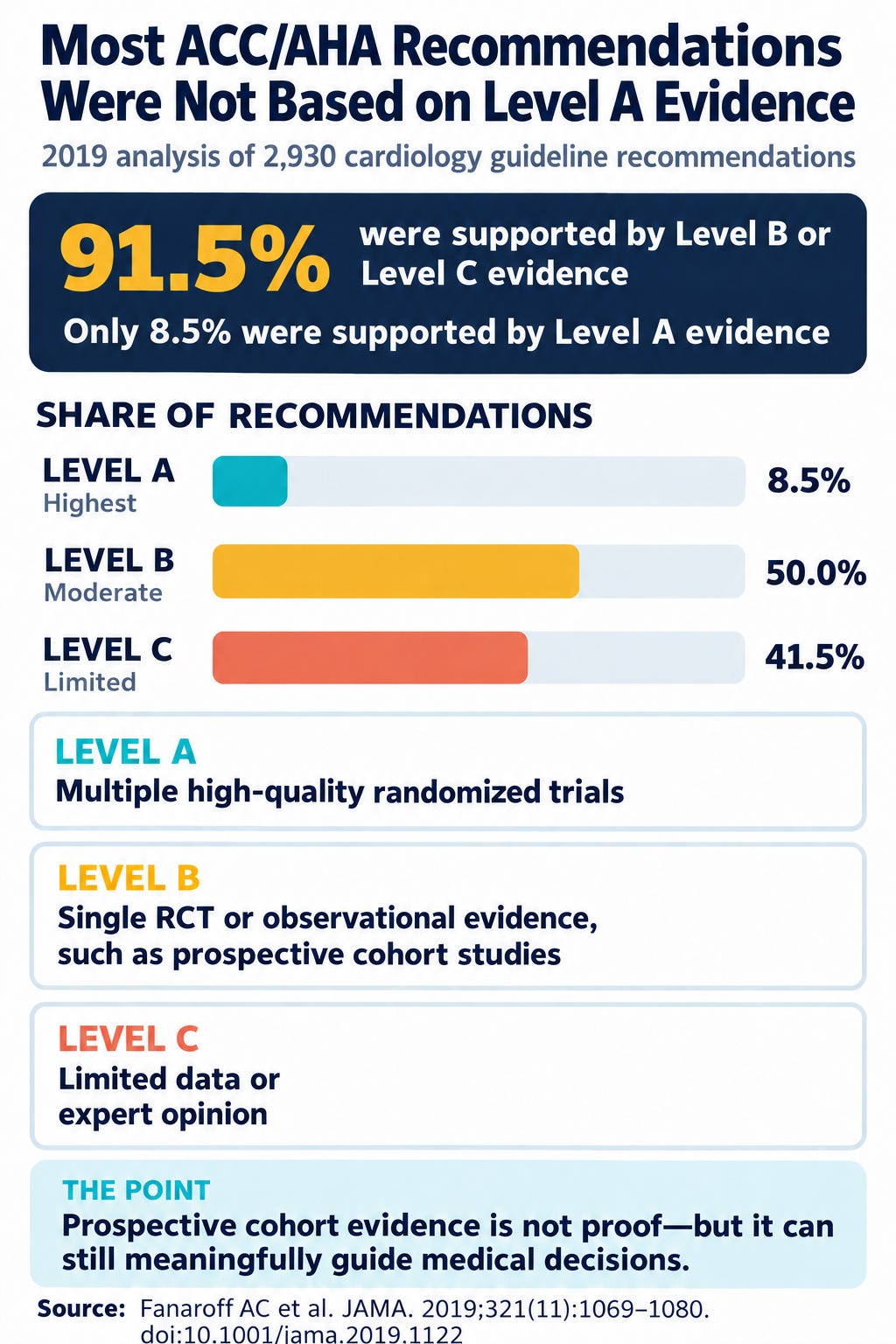
As you can see above, only 8.5% of US cardiology guidelines were based on level A high quality evidence, according to this 2019 study. [9] So what to do in this sea of uncertainty? Or I should say, moderate uncertainty. Let’s look at an area that’s my own personal obsession for guidance: prenatal vitamins and autism.
The studies nobody told me about
My oldest son has autism. We blew off prenatal vitamins because I thought they weren’t that important.
So you can imagine how stunned I was later to discover the studies showing an association between prenatal vitamins and lower rates of autism. I had never heard anything about these studies. Neither had any of my physician colleagues. Not a single one. I asked them all. But there they were, in black and white.
Two major US prospective cohort studies. MARBLES (published in 2019) and Boston Birth Cohort (2018). [10, 11] Both showing substantially lower rates of autism for the children of mothers who took prenatal vitamins. MARBLES essentially pinned down the dose and the timing. Timing: the prenatal had to be started before pregnancy, or within about 2 weeks of conception. Dose: prenatals containing at least 600 mcg folate had the more significant association with the lower risk of autism. [10] And the lower rates were substantial. 50% lower autism rates in MARBLES, and 70% for one group in the Boston Birth Cohort. [10, 11] Stunning.
So why did I, and all of my colleagues, and probably you, stay completely in the dark about this association? Well, massive earlier prospective cohort studies out of Europe showed mixed results. Denmark showed absolutely no association at all. [12] Norway showed an association, but a less impressive one and only for a certain subtype of autism. [13]
On closer analysis, the folate doses in the European prenatals were much lower than those in the US. The most popular prenatal in Denmark had only 200 mcg folate, well below the 600 mcg threshold. [14] And in Norway, all prenatal multivitamins had under 400 mcg, again below the threshold. [13] But the doubts sowed by those European studies still linger.
Because these prospective cohort studies are so expensive and time consuming, we only have a handful, seven to be exact. That is seven prospective cohort studies which followed mothers forward and measured autism diagnoses in their children. Here’s a summary of the first five (we’ll cover the remaining two in a future article):
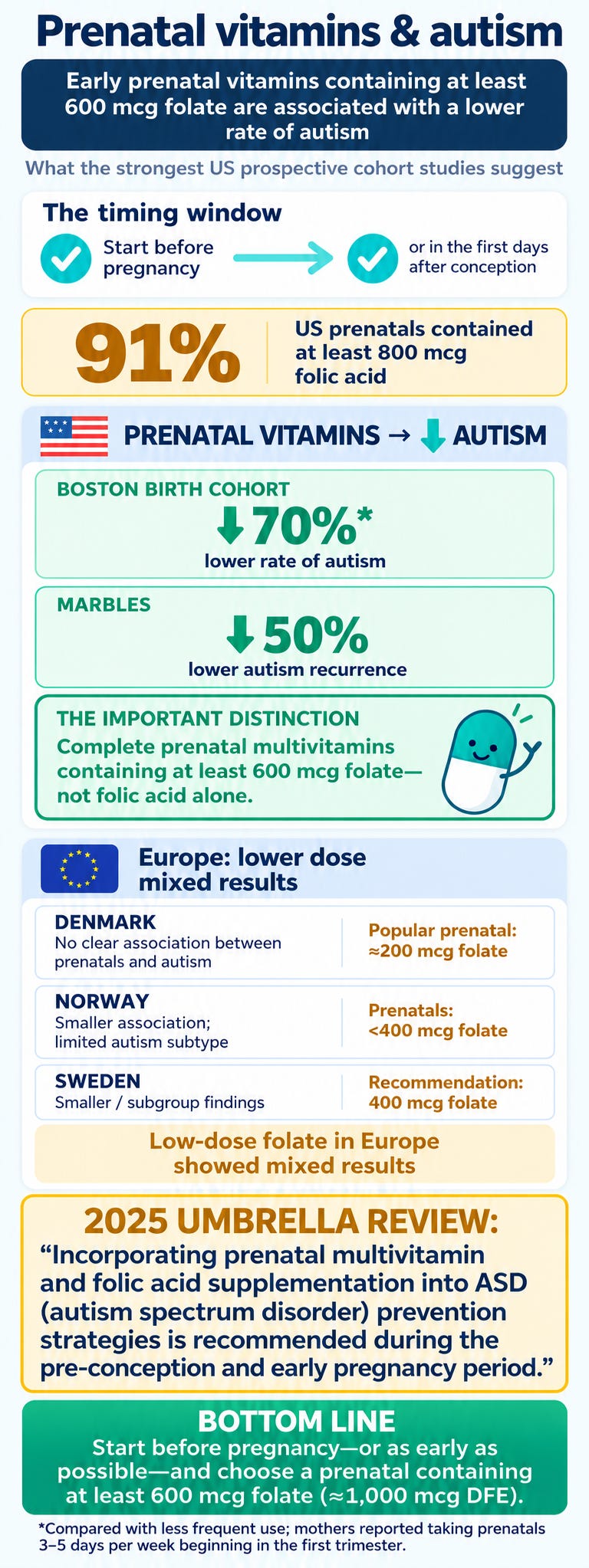
Sources: Saldanha 2019 [15]; Raghavan 2018 [11]; Schmidt 2019 [10]; Schmidt 2012 [16]; Nohr 2014 [14]; Virk 2016 [12]; Surén 2013 [13]; DeVilbiss 2017 [17]; Abate 2025 [18]. Full citations below.
Viewing the graphic above you may wonder why this prenatal vitamin autism association is so unknown. Why the radio silence from medical societies and government agencies?
Hopefully this post helps to explain why. When we can’t really do the gold standard studies, the placebo controlled RCTs, then any potential benefit is up for debate.
Also, the dosing information for these studies was often really hard to find and not in the studies themselves. Only when you see the dosing difference clearly does it seem apparent that prenatals containing folate 800 mcg are consistently associated with a lower rate of autism. Whereas the results are mixed for prenatals with under 400 mcg. A similar dosing effect to that seen in the INMA study which measured the association between prenatal vitamins and cognitive scores. INMA observed lower dose folate was not associated with higher cognitive scores but higher doses in the 400 to 1,000 mcg folate range were. [19]
So when we include moderate quality evidence, like the prenatal vitamin autism evidence, then the potential benefits of prenatal vitamins greatly expand. Here is a graphic listing both proven benefits and potential benefits from prenatal vitamins.
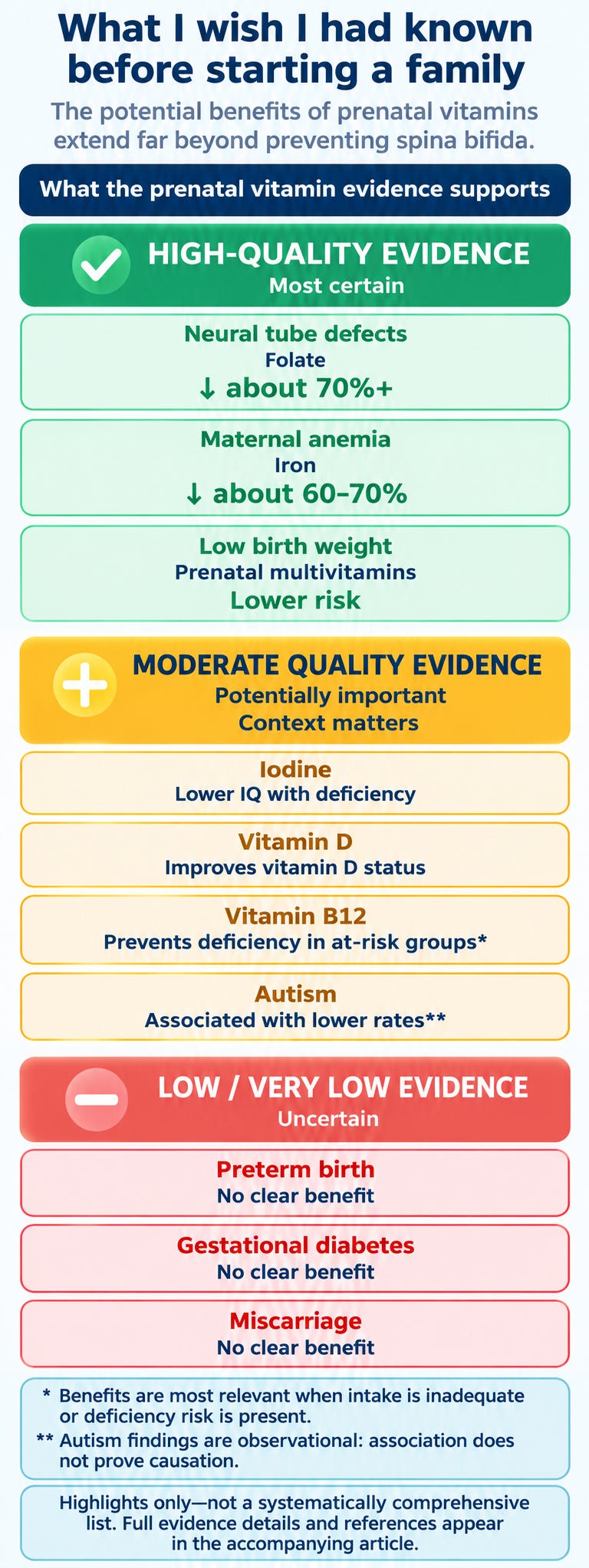
Sources: neural tube defects [5]; maternal anemia [20]; low birth weight [21]; iodine [22]; vitamin D status, preterm birth and gestational diabetes [23]; vitamin B12 [24]; autism [18]; miscarriage [25]. Full citations below.
As you can see in the graphic above, we now actually have 3 benefits for prenatal vitamins supported by high quality evidence. Lower rates of: 1) spina bifida; 2) maternal anemia; and 3) low birth weight. [5, 20, 21] What I hope this graphic demonstrates is that there are so many good reasons to take a prenatal vitamin. Especially when we consider moderate quality evidence which may be as good as we can get. It’s not just all about reducing a rare condition, spina bifida.
How to act without certainty
But how do you decide what to do with evidence that may never be settled?
Here’s what I propose: when the cost is low, the risk is low, and the potential upside is large, follow where the best available evidence points. You don’t need certainty to make a good decision. You need to weigh what you’d lose if you’re wrong against what you’d gain if you’re right.
Apply it to the prenatal itself. It’s cheap. It’s safe. It prevents spina bifida, proven. The possible reduction in autism risk comes along for free. I personally can’t see any argument for skipping it.
Apply it to the dose. The US Preventive Services Task Force already recommends 400 to 800 micrograms of folic acid. [26] Choosing a prenatal containing 600 to 800 means choosing the upper half of a range that’s already considered safe, the half where the autism studies found their greatest association. You give up basically nothing. And if someone reads all this and decides it doesn’t change what they’d do in terms of potential autism reduction, I understand. I love my little boy.
If you’re reading this and you already missed the early window to start prenatals, here’s the honest math. Even with no prenatal at all, the odds of having a child with spina bifida or another neural tube defect are about 1 in 1,000. [27] The odds of autism are about 1 in 31. [28] Of course, the rate is higher than 1 in 31 for those with a family history. Those are the baseline numbers, and they don’t change because you read this post late.
And I want to say this plainly, because I’ve had to say it to myself. I cannot know whether taking a prenatal would have changed anything for my son. Nobody can. These studies compare thousands of pregnancies and tell us how the odds shift across a whole population.
So this isn’t about blame for the pregnancy behind you. It’s about the one in front of you, or your daughter’s, or your friend’s. If you’re done having children, send this to someone who isn’t.
Back to the lemons
In 1747, James Lind discovered a cure for a disease that was ravaging the British Navy. Two oranges and a lemon a day cured scurvy. Yet it took 48 years for the cure to be adopted.
It’s easy to look back and shake our heads, knowing what we know now. But is the same thing happening today?
It’s been 15 years since the CHARGE Study was published, one of the first major studies to observe that prenatal vitamins were associated with a lower risk of autism. [29] 15 years! Yet the public and even doctors are still in the dark.
Like the British Navy, I think we will get there. But let’s get there faster. You can help. Spread the word.
Jeff Zadeh, M.D.
A note on what this is
This is general education from one physician’s perspective, not medical advice. Apart from the neural tube defect, anemia and low birth weight trials, the research described here is observational: it shows association, not proof of cause, and it cannot predict any individual child’s outcome. Please make decisions with your own clinician.
No sponsorships. No affiliate links. I have no financial relationship with any supplement company. I make my living as a doctor treating patients.
References
[1] Lind J. A Treatise of the Scurvy. Edinburgh; 1753. Original text available at the James Lind Library (jameslindlibrary.org).
[2] Tröhler U. James Lind and scurvy: 1747 to 1795. JLL Bulletin: Commentaries on the History of Treatment Evaluation. 2003. https://www.jameslindlibrary.org/articles/james-lind-and-scurvy-1747-to-1795/
[3] Baron JH. Sailors’ scurvy before and after James Lind – a reassessment. Nutr Rev. 2009;67(6):315–32.
[4] MRC Vitamin Study Research Group. Prevention of neural tube defects: results of the Medical Research Council Vitamin Study. Lancet. 1991;338(8760):131–7.
[5] De-Regil LM, Peña-Rosas JP, Fernández-Gaxiola AC, Rayco-Solon P. Effects and safety of periconceptional oral folate supplementation for preventing birth defects. Cochrane Database Syst Rev. 2015;(12):CD007950. doi:10.1002/14651858.CD007950.pub3.
[6] Czeizel AE, Dudás I. Prevention of the first occurrence of neural-tube defects by periconceptional vitamin supplementation. N Engl J Med. 1992;327(26):1832–5. (The Hungarian trial.)
[7] Guertin KA, et al. Coffee consumption and incidence of lung cancer in the NIH-AARP Diet and Health Study. Int J Epidemiol. 2016;45(3):929–39. doi:10.1093/ije/dyv104.
[8] Galarraga V, Boffetta P. Coffee drinking and risk of lung cancer — a meta-analysis. Cancer Epidemiol Biomarkers Prev. 2016;25(6):951–7. doi:10.1158/1055-9965.EPI-15-0727.
[9] Fanaroff AC, Califf RM, Windecker S, Smith SC, Lopes RD. Levels of evidence supporting American College of Cardiology/American Heart Association and European Society of Cardiology guidelines, 2008–2018. JAMA. 2019;321(11):1069–80. doi:10.1001/jama.2019.1122. Throughout this post I’m using the standard ACC/AHA cardiology definition of evidence quality, where Level A, the top of the pyramid, means two or more randomized controlled trials.
[10] Schmidt RJ, Iosif AM, Guerrero Angel E, Ozonoff S. Association of maternal prenatal vitamin use with risk for autism spectrum disorder recurrence in young siblings. JAMA Psychiatry. 2019;76(4):391–8. (MARBLES.) doi:10.1001/jamapsychiatry.2018.3901.
[11] Raghavan R, Riley AW, Volk H, et al. Maternal multivitamin intake, plasma folate and vitamin B12 levels and autism spectrum disorder risk in offspring. Paediatr Perinat Epidemiol. 2018;32(1):100–11. (Boston Birth Cohort.) doi:10.1111/ppe.12414.
[12] Virk J, Liew Z, Olsen J, et al. Preconceptional and prenatal supplementary folic acid and multivitamin intake and autism spectrum disorders. Autism. 2016;20(6):710–8. (Denmark.) doi:10.1177/1362361315604076.
[13] Surén P, Roth C, Bresnahan M, et al. Association between maternal use of folic acid supplements and risk of autism spectrum disorders in children. JAMA. 2013;309(6):570–7. (Norway.)
[14] Nohr EA, Olsen J, Bech BH, et al. Periconceptional intake of vitamins and fetal death: a cohort study on multivitamins and folate. Int J Epidemiol. 2014;43(1):174–84. (Folate content of the Danish prenatals.) doi:10.1093/ije/dyt214.
[15] Saldanha L, Dwyer J, Potischman N, Andrews K. Folic acid in prenatal supplements: labeled amounts compared to recommendations (P11-024-19). Curr Dev Nutr. 2019;3(Suppl 1):nzz048.P11-024-19. doi:10.1093/cdn/nzz048.P11-024-19. https://pmc.ncbi.nlm.nih.gov/articles/PMC6578410/
[16] Schmidt RJ, Tancredi DJ, Ozonoff S, et al. Maternal periconceptional folic acid intake and risk of autism spectrum disorders and developmental delay in the CHARGE case-control study. Am J Clin Nutr. 2012;96(1):80–9.
[17] DeVilbiss EA, Magnusson C, Gardner RM, et al. Antenatal nutritional supplementation and autism spectrum disorders in the Stockholm Youth Cohort. BMJ. 2017;359:j4273. (Sweden.)
[18] Abate BB, Tusa BS, Sendekie AK, et al. The association between maternal prenatal folic acid and multivitamin supplementation and autism spectrum disorders in offspring: an umbrella review. PLoS One. 2025;20(11):e0334852. doi:10.1371/journal.pone.0334852.
[19] Valera-Gran D, Navarrete-Muñoz EM, Garcia de la Hera M, et al.; INMA Project. Effect of maternal high dosages of folic acid supplements on neurocognitive development in children at 4–5 y of age: the prospective birth cohort Infancia y Medio Ambiente (INMA) study. Am J Clin Nutr. 2017;106(3):878–887. doi:10.3945/ajcn.117.152769. https://pubmed.ncbi.nlm.nih.gov/28724645/
[20] Finkelstein JL, Cuthbert A, Weeks J, et al. Daily oral iron supplementation during pregnancy. Cochrane Database Syst Rev. 2024;(8):CD004736. doi:10.1002/14651858.CD004736.pub6. Under the ACC/AHA definition used throughout this post, multiple randomized trials make this Level A evidence. Cochrane, which uses a different grading system (GRADE), rate the certainty as moderate for iron-deficiency anemia and low for anemia overall.
[21] Keats EC, Haider BA, Tam E, Bhutta ZA. Multiple-micronutrient supplementation for women during pregnancy. Cochrane Database Syst Rev. 2019;(3):CD004905. doi:10.1002/14651858.CD004905.pub6.
[22] Korevaar TIM, Leung AM, Alexander EK, et al. American Thyroid Association 2026 Guidelines for Thyroid Disease in Preconception, Pregnancy, and Postpartum. Thyroid. 2026;36(5):481–544. doi:10.1177/10507256261445624.
[23] Palacios C, Kostiuk LL, Cuthbert A, Weeks J. Vitamin D supplementation for women during pregnancy. Cochrane Database Syst Rev. 2024;(7):CD008873. doi:10.1002/14651858.CD008873.pub5.
[24] Finkelstein JL, Fothergill A, Venkatramanan S, et al. Vitamin B12 supplementation during pregnancy for maternal and child health outcomes. Cochrane Database Syst Rev. 2024;(1):CD013823. doi:10.1002/14651858.CD013823.pub2.
[25] Balogun OO, da Silva Lopes K, Ota E, et al. Vitamin supplementation for preventing miscarriage. Cochrane Database Syst Rev. 2016;(5):CD004073. doi:10.1002/14651858.CD004073.pub4.
[26] US Preventive Services Task Force. Folic acid supplementation to prevent neural tube defects: US Preventive Services Task Force reaffirmation recommendation statement. JAMA. 2023;330(5):454–459. doi:10.1001/jama.2023.12876.
[27] Duke Molecular Physiology Institute. Neural tube defects (NTDs). Duke University. Accessed October 1, 2026. https://dmpi.duke.edu/neural-tube-defects-ntds Gives an estimate of approximately 1 in 1,000 U.S. live births; the page does not identify the estimate’s study period.
[28] Shaw KA, Williams S, Patrick ME, et al. Prevalence and early identification of autism spectrum disorder among children aged 4 and 8 years—Autism and Developmental Disabilities Monitoring Network, 16 sites, United States, 2022. MMWR Surveill Summ. 2025;74(2):1–22. https://www.cdc.gov/mmwr/volumes/74/ss/ss7402a1.htm
[29] Schmidt RJ, Hansen RL, Hartiala J, et al. Prenatal vitamins, one-carbon metabolism gene variants, and risk for autism. Epidemiology. 2011;22(4):476–485. doi:10.1097/EDE.0b013e31821d0e30.