


The window where you get to decide what goes in your child’s body disappears so fast. Thankfully that brief moment of time, while your child is still in the womb, appears to be the most critical of all. Below, we will go through how to make the most of it.
I try to pack my third grader a healthy lunch. Homemade baked chicken, a mandarin orange partially peeled. All of it placed in a stainless steel lunch box.
And what does that little turkey, my son, do with his healthy lunch?
He trades it!
The chicken gets swapped out for some bright neon crackers. The mandarin gets traded for an applesauce pouch. You know, the kind of applesauce pouch loaded with heavy metals like lead, that shows up on an evening news investigation. I pack him a healthy lunch in a stainless-steel container. He runs a black market out of it by recess.
I try to laugh about it, but it does make me a little uneasy. I have basically lost control of what goes in my little boy’s body, and it happened long before third grade.
It is easy to feel helpless, but there is at least one saving grace. Thankfully, that brief period when you do have full control, those days and weeks after conception, appears to be the most important. Those earliest days form the foundation.
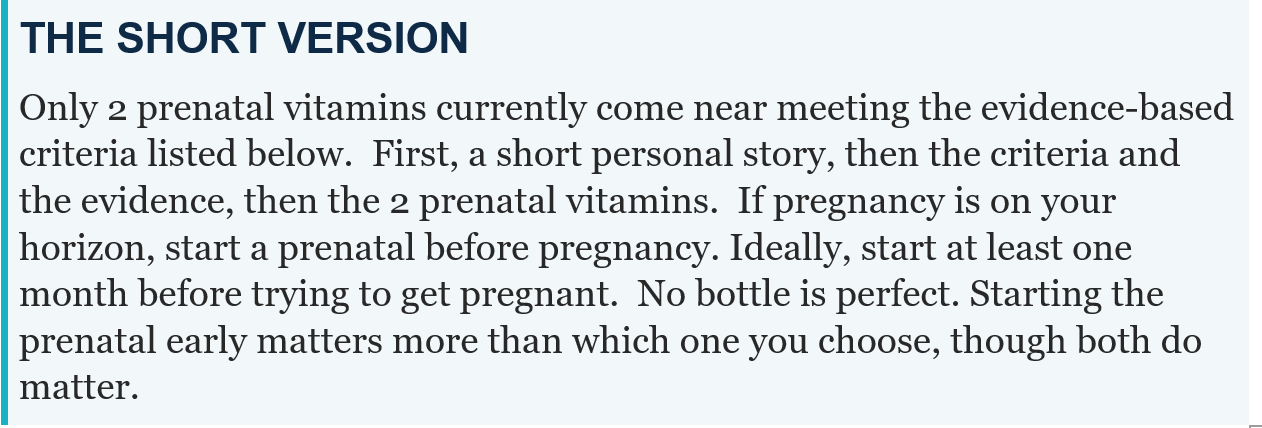
We will cover a summary of the latest evidence here. And how I believe this evidence points toward choosing certain prenatals over others. If you want to look at a more complete look at the evidence, then that’ll be in the next post.
The Importance of Starting Early
The architecture of your child’s central nervous system forms in the first few weeks after conception. Often before you even know you’re pregnant.
Sufficient nutrients are most critical during this earliest phase of life. For this reason, every major medical organization recommends starting a prenatal with folate BEFORE pregnancy. Ideally, start prenatal vitamins at least one month before trying to get pregnant. [1]
Folate: The Star of the Show
What’s so important about folate? What does it even do? I get those questions a lot. People generally know they’re supposed to take it but they don’t really know why.
The first fact to know is that folate is a B vitamin. Vitamin B9 specifically.
Next, it’s important to understand carbon’s relationship to folate. That’s because carbon forms the backbone of all living things. Trees, plants, humans, all life. Think of a single carbon atom as one single LEGO block that can become a much bigger structure, ultimately life itself.
Folate donates a single carbon atom to those growing structures, sort of like adding one LEGO block. It can also take away a single carbon atom, sort of like taking off one LEGO block.
So you can imagine folate’s supreme importance in the earliest phase of life, when growth is so rapid. Building DNA. Building amino acids.
Folate also donates single carbon atoms to attach to DNA. This attachment to DNA, something called methylation, turns on and off expression of specific genes. [2]
1. Methylfolate, not folic acid
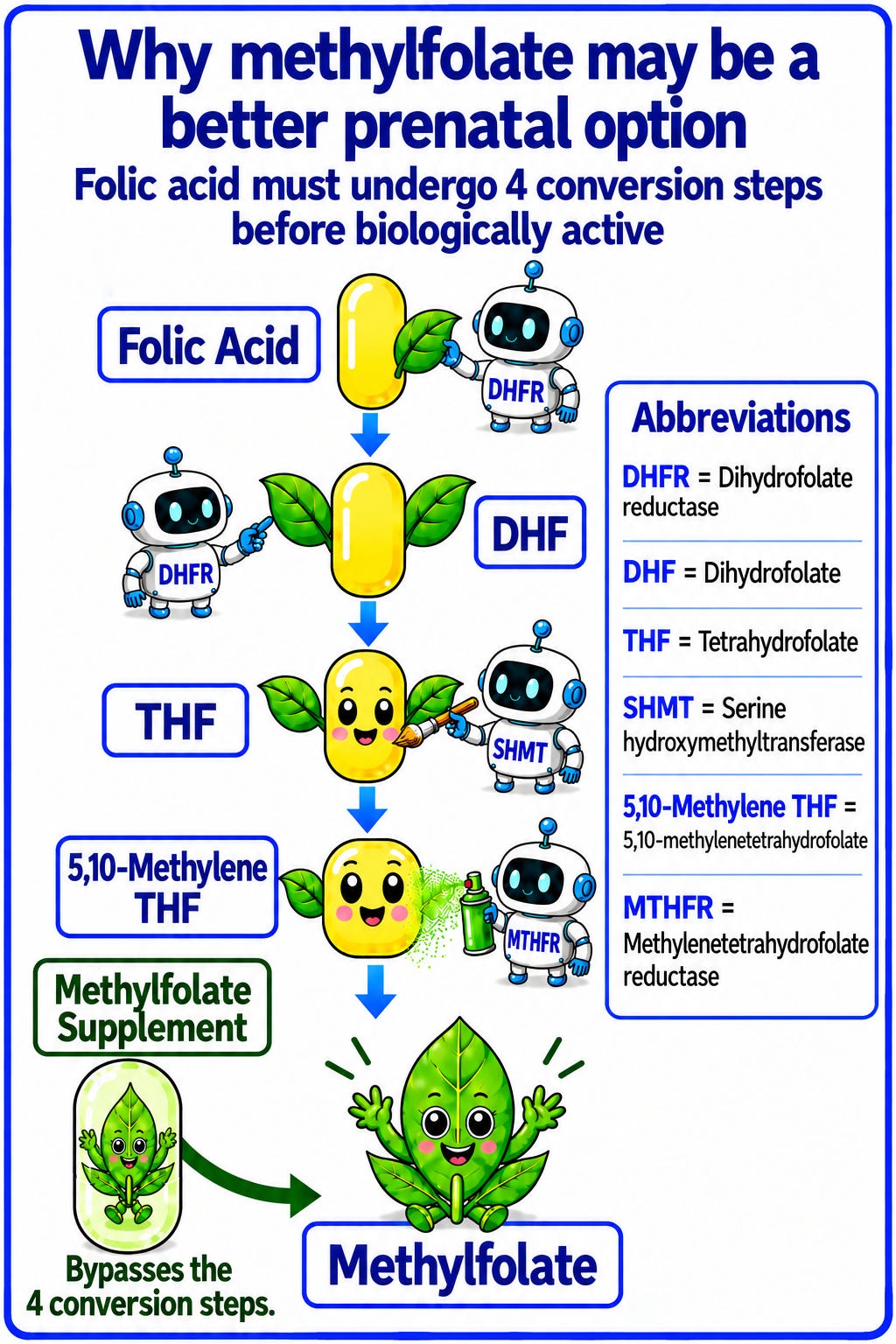
Methylfolate is the more natural form of folate. Your body absorbs it from the prenatal and can put it to use immediately, without any need for conversion. Methylfolate is the same form that you would get from leafy green vegetables or beans or broccoli.
Folic acid, on the other hand, is the artificial synthetic form of folate. Your body must first convert folic acid into its active form (i.e. methylfolate) through several enzymes before it’s useful. And many people convert folic acid poorly, which can lead to a buildup of potentially concerning unmetabolized folic acid.
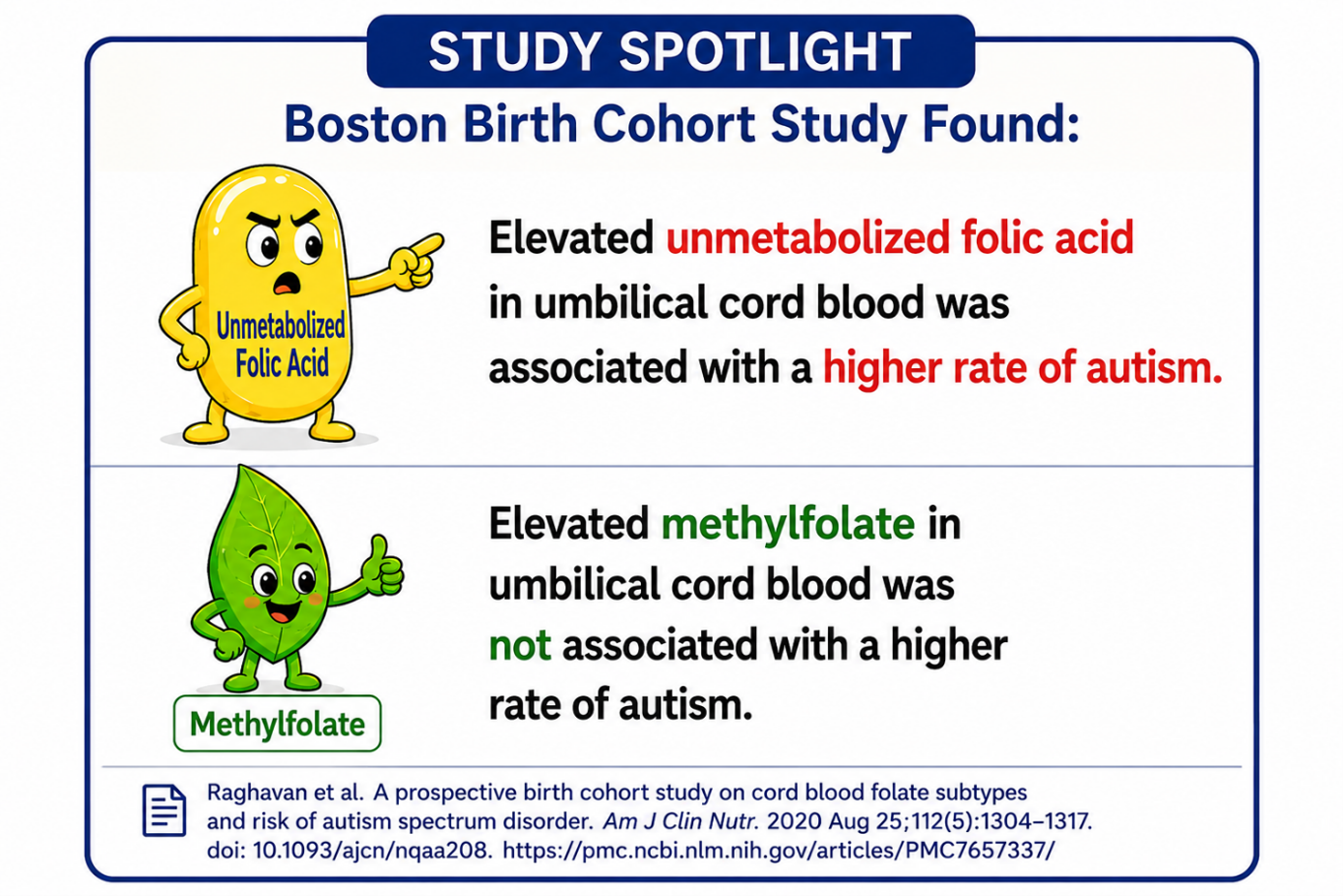
Why may unmetabolized folic acid matter? Well, the Boston Birth Cohort Study observed that higher levels of unmetabolized folic acid in umbilical cord blood were associated with a higher rate of autism in the child. [3] And a higher rate of food allergies. [4] Higher levels of methylfolate, however, showed no such associations. [3, 4] And folic acid intake leads to higher levels of unmetabolized folic acid compared to methylfolate. [5] So the theory is that methylfolate gives all of folic acid’s benefits without the potential downside.
This methylfolate suggestion is not yet mainstream. Folic acid is the form of folate recommended by major medical organizations and the CDC. [1, 2] Folic acid does in fact have more research than methylfolate to support its benefits. For instance, folic acid has been shown to reduce spina bifida, and other neural tube defects. [6] However, that plentiful research base is simply because folic acid has been around much longer. Those spina bifida studies were published in the early 1990s, before methylfolate was even widely available (which came in about 2002).
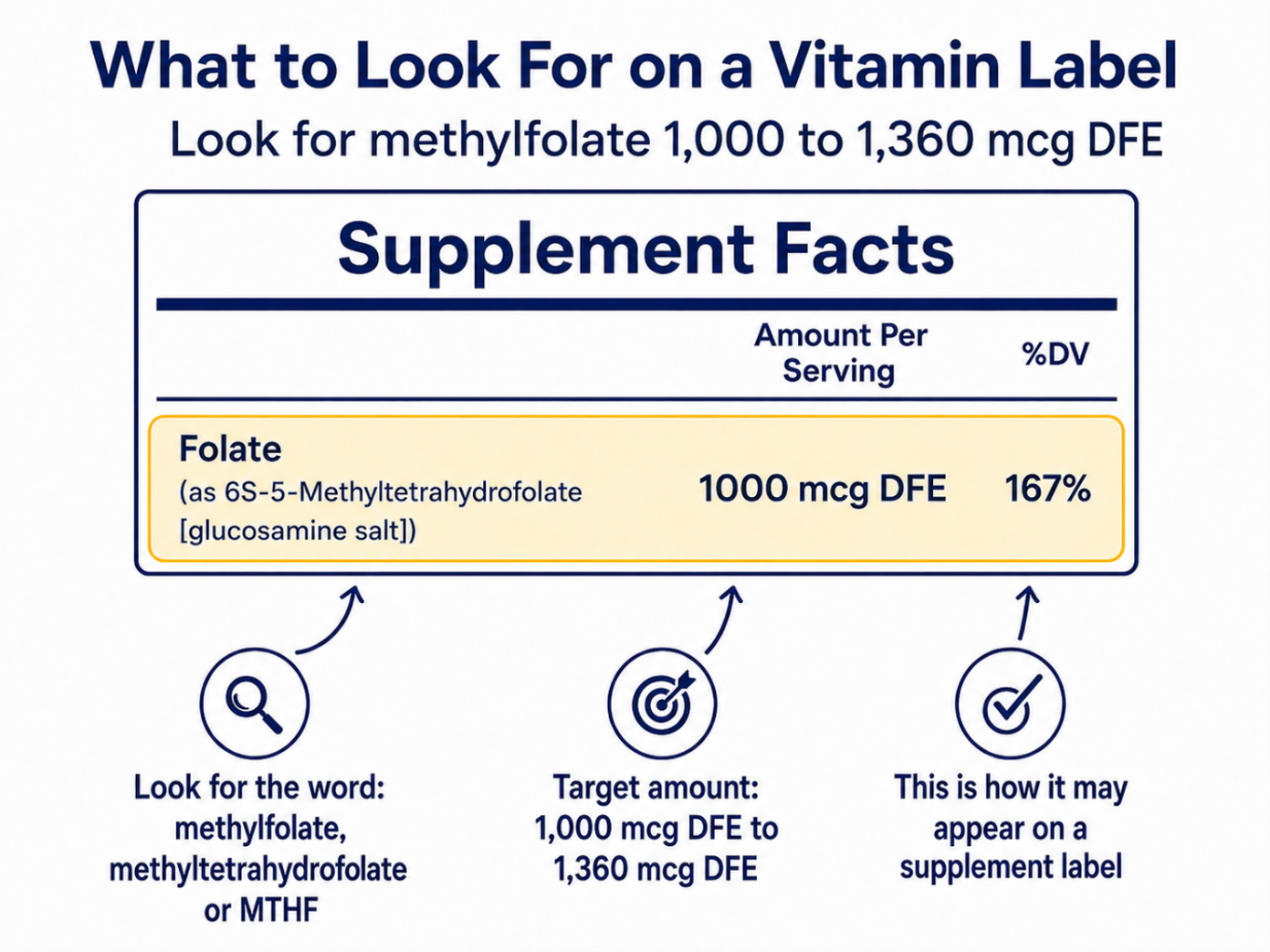
Methylfolate’s popularity has been growing since its release. Five of the top ten best selling OTC prenatal vitamins now contain methylfolate instead of folic acid at my last check on Amazon (in 2026). So methylfolate’s use has become really common practice now even though government agencies and major medical organizations have not recommended it yet. Note that other names for methylfolate on the prenatal vitamin label include MTHF and methyltetrahydrofolate. [7]
To be clear, folic acid is still an amazing option and has in fact been associated with lower rates of autism. [8, 9, 10] If I were a school teacher handing out grades, I would give folic acid an A grade. But I would give methylfolate an even better grade: A+. Based on the current state of the evidence.
For an academic discussion on why methylfolate over folic acid, see the following [7]
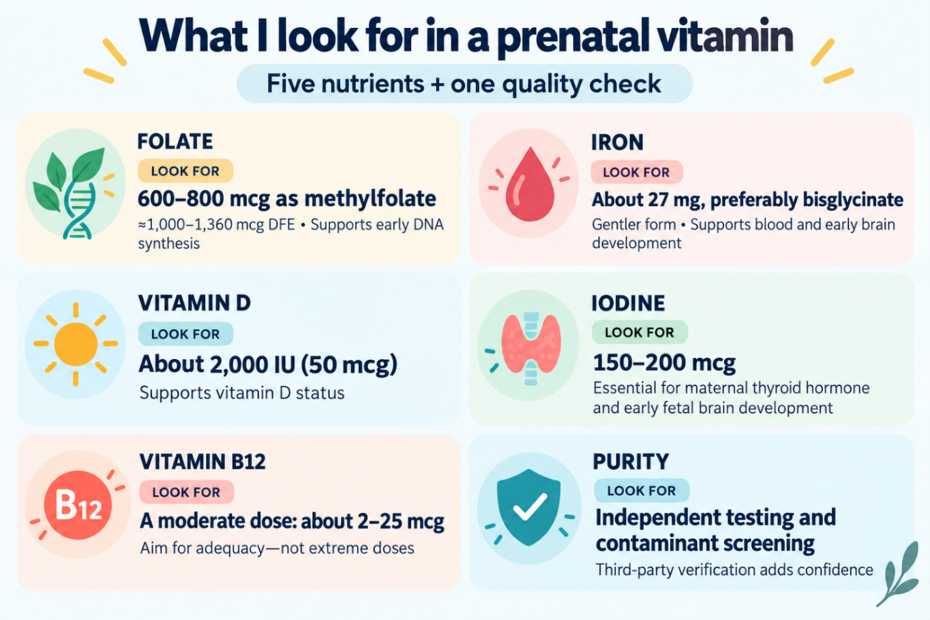
2. 600 to 800 micrograms methylfolate (equals 1,000 to 1,360 mcg DFE)
The US Preventive Services Task Force recommends 400 to 800 mcg of folate in a daily prenatal. [1] So why do I like the upper half of that range, i.e. 600 to 800 mcg?
Two major US studies, CHARGE and MARBLES, looked at this specific question: at what dose of folate was there an association with a lower rate of autism? They both found the same threshold: 600 mcg. [9, 10] And in fact, in MARBLES, 800 mcg was associated with an even lower rate of autism versus 600 mcg. [10] However, anything much higher than an 800 mcg daily average has been associated with worse outcomes. [11] Think of it more as a gradient at 600 rather than a hard cutoff since these studies were not specifically designed to test precise dosing.
Even though these studies do not prove causation, they provide moderate level evidence, which is likely the best that we will ever have, as discussed in the next post where we will review the evidence in more detail. So if moderate level evidence supports 600 to 800 mcg and it’s in the safe range that’s already recommended, why not? [12]
On US prenatal labels we use micrograms dietary folate equivalents, or mcg DFE. The conversion factor is 1.7. So 600 to 800 mcg of actual methylfolate would be labeled as about 1,000 to 1,360 mcg DFE. [13] Here is how it would look on a prenatal vitamin label:
3. Iron 27 mg, in the form of iron bisglycinate
Iron is the most common reason why women quit taking their prenatal vitamins. Which is a shame because iron is also the most common nutrient deficiency in the world. Unfortunately, iron can tear apart your stomach or cause constipation and nausea. However, the newer formulation iron bisglycinate is a real breakthrough. Much easier on the GI tract. [14, 15] And it absorbs better too, even when taken with food. [16, 17] A prenatal with iron bisglycinate costs a little more, but you’ll probably find it’s worth it.
Why take iron at all? Well, in the MARBLES study, mothers in the highest tertile of iron supplementation, which started at about 27 mg, had roughly HALF the rate of autism in their children compared with mothers taking none. [10] And in the CHARGE study, low iron intake combined with maternal age over 35 was associated with a 5 TIMES higher rate of autism. [18]
Prenatal gummies, the ones that are like gummy bears, DO NOT contain iron. I have seen that mistake by patients and even by an OB. The patient, an acquaintance who shared the story with me, was significantly iron deficient but chose a gummy prenatal. The OB had told her to “pick a prenatal, any prenatal”. Neither the patient nor the OB knew that gummy prenatals have ZERO iron. The important point is to check the bottle to make sure it contains iron.
The FDA recommends iron 27 mg as the daily value during pregnancy. [2] Why not take it in the form that you’re more likely to tolerate?
4. Vitamin D, about 2,000 IU (equals 50 mcg)
Nearly every patient I check is low on vitamin D unless they supplement. One study out of Taiwan found 99% of pregnant women were low. [19] Our bodies create vitamin D from sun exposure. Most of us tend to spend a lot more time indoors these days than we did in the past, meaning we get less sun exposure and have lower vitamin D levels.
The appropriate dose of vitamin D during pregnancy is still an area of active debate, believe it or not. You’d think we’d have the dose nailed down by now, but we do not.
I favor 2,000 IU, which is now a common dose in US prenatals. Here’s why. The current US RDA of 600 IU during pregnancy was set based on bone health alone and is simply too low to correct a deficiency. The Endocrine Society has recommended 1,500 to 2,000 IU to reach sufficient blood levels in its past guidelines. [20] Its 2024 guideline specifically cites evidence that higher dosing may lead to lower rates of pre-eclampsia, intrauterine mortality, preterm birth, small-for-gestational-age birth, and neonatal mortality. [21] Several European countries also recommend 2,000 IU. [22] Even organizations that still recommend 600 IU generally concede that 2,000 IU is safe. [2]
So the higher dose of 2,000 IU may lead to better outcomes, has a higher probability of correcting deficiency and is generally regarded as safe. I personally can’t see a reason to take 600 IU instead of 2,000 IU. It would also be reasonable to ask your provider to check your vitamin D levels, especially if you’re at higher risk for deficiency due to conditions like limited sun exposure.
5. Enough iodine, and a sane amount of B12
Iodine is the main raw material that your body needs to make thyroid hormone. Your baby depends on your thyroid hormone for about the first 4 months after conception because the baby’s own thyroid gland has not fully formed by that point.
Most US pregnant women are mildly deficient in iodine. The American Thyroid Association recommends 150 mcg as part of your prenatal. [23] Make sure to check because some prenatal vitamins do not contain iodine at all.
Finally, vitamin B12. The data to support B12 supplementation is relatively weak, though deficiency has been associated with multiple poor outcomes in observational data. The RDA during pregnancy for B12 is 2.6 mcg daily. [2] That amount should be enough to hold off deficiency outside of certain exceptions (such as vegans, bariatric surgery, use of acid reducing medications or pernicious anemia).
We have only recently learned that over supplementation of B12 may be an issue. Higher blood levels of B12 in the mother during pregnancy have been associated with higher rates of autism in the child. Two separate studies, one from Boston and one from Finland, found higher rates of autism in children of mothers who were in about the top 10 to 20 percent of B12 blood levels. [24, 25] The quality of that evidence is low to moderate. But there’s also no high quality evidence to support extremely high supplementation with B12 either, so personally I’d shy away from prenatals containing over 25 mcg.
The B12 amount is actually worth checking on the label, because the megadoses cluster in an unexpected place. Several of the premium, most expensive prenatals — the ones running up to $70 a month — often contain 100 to 200 mcg of B12, which is 40 to 80 times the standard pregnancy requirement. I prefer vitamin B12 in a range of 2.6 to 25 mcg in a prenatal.
6. Purity testing
Even ideal nutrients at ideal doses may not be enough if the prenatal has a contamination issue. I like to see independent third party testing for purity.
The Clean Label Project Purity Award is available only for the top third of all prenatals in testing that looks at over 400 industrial and environmental contaminants. [26] Ideally, I also prefer to cross-check a Purity Award winner with prenatal heavy metal levels published on the consumer advocate website tamararubin.com. I am most impressed when I see a prenatal scoring well on both these sources. [27]
The two products that come closest
Unfortunately, not a single prenatal vitamin checks every box that I have discussed in this post. Not one.
However, two do come closer than the others.
Ritual Essential Prenatal Multivitamin for Women
Ritual checks almost every box but not quite. Most importantly, methylfolate 1,000 mcg DFE. Check. Vitamin D 2,000 IU. Check. Iodine 150 mcg. A reasonable vitamin B12 dose of 8 mcg. [28] Clean Label Project Purity Award and some of the lowest heavy metal levels on tamararubin.com. Check, check and check. [29]
The only place where Ritual falls short on my list is the dose of iron. 18 mg, whereas I’d prefer to see at least 27 mg based on the MARBLES study discussed above. But I do like the form of iron in Ritual which is iron bisglycinate. [28] So it is mostly just the dose of iron which falls a little short.
Designs for Health Prenatal Pro
Prenatal Pro contains a fuller list of vitamins and minerals, whereas Ritual focuses on just the more essential ones for pregnancy. However, Prenatal Pro checks fewer boxes than Ritual. Most importantly, Prenatal Pro has methylfolate 1,360 mcg DFE and iron bisglycinate 27 mg. Two big check marks. Iodine 200 mcg. Check. Vitamin B12 at a reasonable dose of 2.8 mcg. [30] Relatively low levels of heavy metals, especially lead, on tamararubin.com. Check, check. [29]
Where does Prenatal Pro fall a little short on my list? The prenatal submits to independent third party testing but does not have any third party certification such as the Clean Label Project. The vitamin D is also a little low at 1,000 IU. [30]
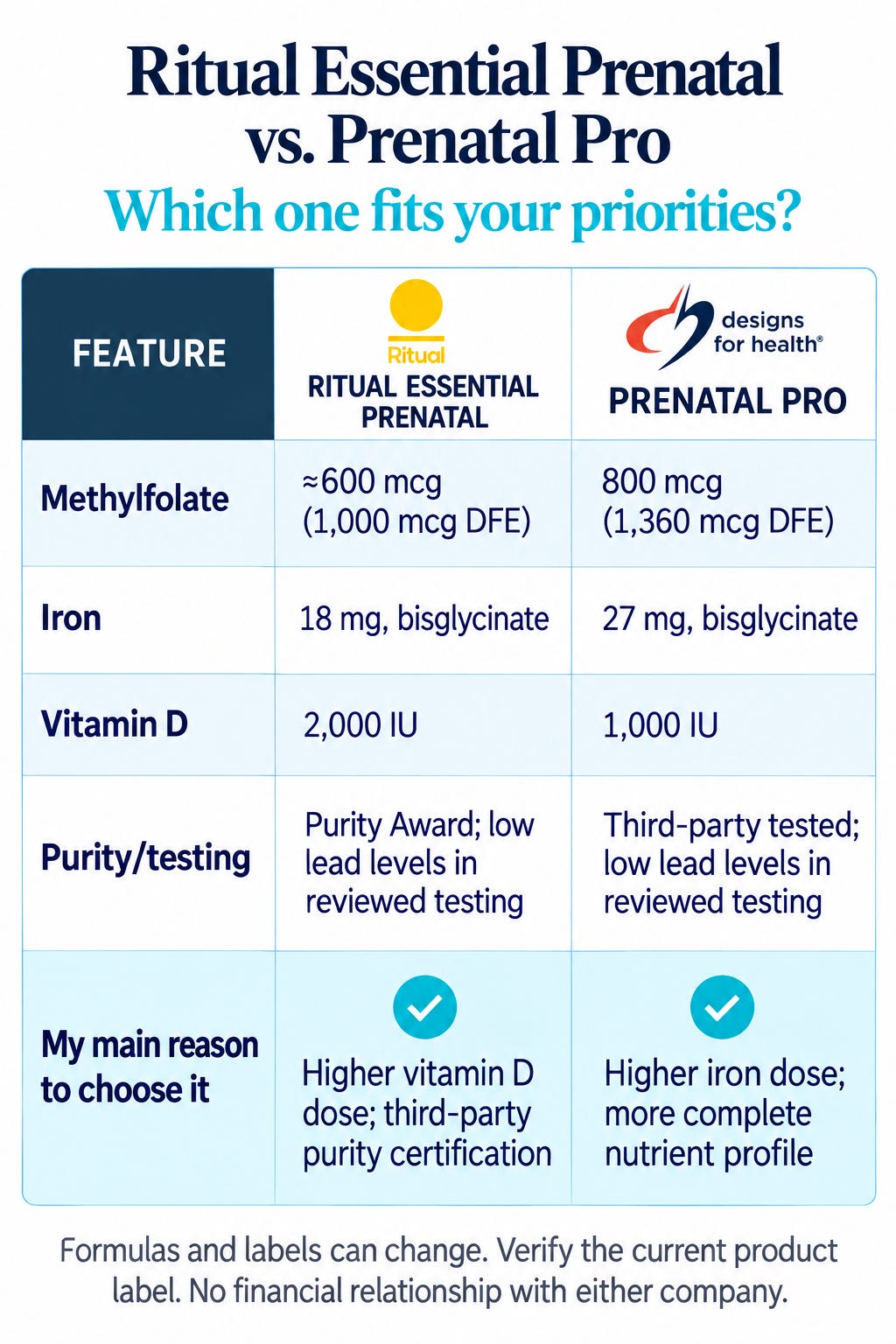
Ritual tends to be a little cheaper at about $40 for a 30 day supply. It’s also much more widely available on shelves at places like Target, Walmart and Costco.
Prenatal Pro costs a little more, about $55 per month at last check. It’s also not available on local store shelves that I have been able to find. If you do buy it online, I like to buy directly from the manufacturer’s website. I worry about counterfeits on websites like Amazon, as explained in this ConsumerLab article on counterfeit supplements. [31]
What if you live outside the United States?
Outside of the United States, it’s even harder to find a prenatal which checks every box, or even most of the boxes. However, there are a few options.
First, you can generally have the two prenatal vitamins mentioned here (Ritual and Prenatal Pro) delivered internationally through a website such as iHerb.com. However, you might want to check a few things if you do so: confirm that the product and quantity are permitted for personal importation; select prepaid duties when available; and verify the seal, expiration date and current label after delivery.
Second, you may be able to build your own prenatal vitamin piece by piece. Simply find each one of the nutrients mentioned here at the appropriate dose. In other words, find each one of the following as individual pills and take them together: 1) methylfolate 600 to 800 mcg; 2) iron bisglycinate 27 mg; 3) vitamin D 2,000 IU; 4) iodine 150 mcg; and 5) vitamin B12 2.6 to 25 mcg. Discuss with your personal physician about this strategy, of course.
Finally, Elevit is a prenatal vitamin available almost everywhere worldwide, manufactured by Bayer. It contains the higher 800 mcg folate dose, but in my less preferred form of folic acid. And the iron is in the form of ferrous fumarate instead of my preferred iron bisglycinate. Elevit formulations can differ by country, so check the label where you live. For those reasons I like Ritual or Prenatal Pro better, but Elevit may be a more practical option that you can find on local shelves internationally. For my own family, I would take Elevit 5 days a week, not 7. However, you should discuss the 5 days a week option with your physician before proceeding with that choice. [24] You can see the full rationale for the 5 days a week idea here on my substack: https://beforeconception.substack.com/p/the-deeper-pregnancy-prep-checklist
No sponsorships. No affiliate links.
I have no financial relationships with any companies mentioned in this post. Nobody paid me. Nobody sent me product. You won’t find any “affiliate link in the description below”. I make my living as a physician taking care of patients.
If a better prenatal shows up next year, I want to change my suggestions. If you find a product that meets these criteria better than the two above, send it to me. I will look at it.
So if not for sponsorships, then why am I doing all of this, basically for free? Well, I got this one wrong for my own family. I’m the doctor in the family, and I blew off prenatals. Thinking they were just about preventing spina bifida, which is rare, I focused on us just eating a little healthier. I never took the time to look at the broader medical literature when it mattered. And now my oldest son Luke has autism. The two are not necessarily tied together, but they could be. As you’ll see for yourself in the next post.
Plunging down the rabbit hole of the latest data opened my eyes. And ultimately became this Substack. Like Saul from Tarsus, I’m a convert, with all the passion and fire to boot. But without the judgment. I got it wrong myself.
Back to the lunchbox
Here is what I keep thinking about as I stand at my kitchen counter packing a lunch that I know will get traded away.
So much of protecting our kids is out of our control. You pack a stainless steel lunch box and they swap it out for an applesauce pouch loaded with heavy metal toxins. You try to cut back on plastics but it’s basically hopeless once they can walk out the front door. You try to hold a line and your kids shoot back that you worry too much, loosen up, nobody else cares.
But during pregnancy, and most importantly, those first few days and weeks after conception, you get to decide. A prenatal bottle. A glass of water. One decision, every morning. It matters because this is one of those few moments when the choice is simple, low cost and still all yours.
Next Up:
The actual evidence behind prenatal vitamins. Why should you even take them in the first place? With a focus on the relationship between prenatal vitamins, autism and neural tube defects. An easy to understand guide through the evidence. Read it and you will probably know more than most doctors in my experience.
Disclaimer:
General education from one physician’s perspective, not individualized medical advice. The research discussed across this series is largely observational—showing associations, not definitive clinical proof of causation—and cannot predict any individual child’s neurodevelopmental outcome. Please review all supplement regimens with your personal healthcare provider.
References and notes
[1] US Preventive Services Task Force. Folic acid supplementation to prevent neural tube defects: US Preventive Services Task Force reaffirmation recommendation statement. JAMA. 2023;330(5):454–459. doi:10.1001/jama.2023.12876. Source The recommendation specifies 400–800 mcg of folic acid daily, starting at least one month before conception; it does not specify methylfolate.
[2] National Institutes of Health, Office of Dietary Supplements. Dietary supplements and life stages: pregnancy—health professional fact sheet. Accessed October 6, 2026. Source Includes pregnancy nutrient requirements and folate forms. The pregnancy RDA is total intake, not necessarily the amount required from a supplement alone.
[3] Raghavan R, Selhub J, Paul L, et al. A prospective birth cohort study on cord blood folate subtypes and risk of autism spectrum disorder. Am J Clin Nutr. 2020;112(5):1304–1317. doi:10.1093/ajcn/nqaa208. Source
[4] McGowan EC, Hong X, Selhub J, et al. Association between folate metabolites and the development of food allergy in children. J Allergy Clin Immunol Pract. 2020;8(1):132–140.e5. doi:10.1016/j.jaip.2019.06.017. Source
[5] Cochrane KM, Elango R, Devlin AM, Mayer C, Hutcheon JA, Karakochuk CD. Supplementation with (6S)-5-methyltetrahydrofolic acid appears as effective as folic acid in maintaining maternal folate status while reducing unmetabolised folic acid in maternal plasma: a randomised trial of pregnant women in Canada. Br J Nutr. 2024;131(1):92–102. doi:10.1017/S0007114523001733. Source This trial measured folate biomarkers, not prevention of autism or neural tube defects.
[6] Czeizel AE, Dudás I. Prevention of the first occurrence of neural-tube defects by periconceptional vitamin supplementation. N Engl J Med. 1992;327(26):1832–1835. doi:10.1056/NEJM199212243272602. Source
[7] Tate C, Shuman A, Nice S, Salehi P. The critical role of folate in prenatal health and a proposed shift from folic acid to 5-methyltetrahydrofolate supplementation. Georgetown Medical Review. 2024;8(1). doi:10.52504/001c.124570. Source A narrative review advocating a change in practice, not a professional-society guideline or a clinical outcomes trial. It does not verify the author’s 2026 Amazon bestseller count.
[8] Schmidt RJ, Hansen RL, Hartiala J, et al. Prenatal vitamins, one-carbon metabolism gene variants, and risk for autism. Epidemiology. 2011;22(4):476–485. doi:10.1097/EDE.0b013e31821d0e30. Source
[9] Schmidt RJ, Tancredi DJ, Ozonoff S, et al. Maternal periconceptional folic acid intake and risk of autism spectrum disorders and developmental delay in the CHARGE (CHildhood Autism Risks from Genetics and Environment) case-control study. Am J Clin Nutr. 2012;96(1):80–89. doi:10.3945/ajcn.110.004416. Source
[10] Schmidt RJ, Iosif AM, Guerrero Angel E, Ozonoff S. Association of maternal prenatal vitamin use with risk for autism spectrum disorder recurrence in young siblings. JAMA Psychiatry. 2019;76(4):391–398. doi:10.1001/jamapsychiatry.2018.3901. Source
[11] Compañ Gabucio LM, García de la Hera M, Torres Collado L, et al. The use of lower or higher than recommended doses of folic acid supplements during pregnancy is associated with child attentional dysfunction at 4–5 years of age in the INMA project. Nutrients. 2021;13(2):327. doi:10.3390/nu13020327. Source Dose groups were <400, 400–999, and ≥1,000 mcg/day of folic acid. This study does not establish 800 mcg as a harm threshold and did not test methylfolate.
[12] A note on causation. These prenatal vitamin studies are suggestive and do not prove causation. I regard them as meaningful, moderate-level evidence; this is my assessment, not a formal guideline evidence grade. A trial withholding recommended periconceptional folic acid would be ethically problematic because its protection against neural tube defects is established. However, randomized trials comparing doses or formulations remain possible. Observational evidence may therefore remain important, but it is not necessarily the strongest evidence we will ever have. See the CHARGE and MARBLES studies above; MARBLES explicitly discusses the possibility and practical challenges of a higher-dose-versus-standard-dose trial.
[13] Saldanha LG, Dwyer JT, Haggans CJ, Mills JL, Potischman N. Perspective: time to resolve confusion on folate amounts, units, and forms in prenatal supplements. Adv Nutr. 2020;11(4):753–759. doi:10.1093/advances/nmaa017. Source The 1.7 multiplier is used on many US 5-MTHF product labels. NIH notes that formal DFE conversion factors for supplemental 5-MTHF have not been established; check the particular product’s label.
[14] Milman N, Jønsson L, Dyre P, Pedersen PL, Larsen LG. Ferrous bisglycinate 25 mg iron is as effective as ferrous sulfate 50 mg iron in the prophylaxis of iron deficiency and anemia during pregnancy in a randomized trial. J Perinat Med. 2014;42(2):197–206. doi:10.1515/jpm-2013-0153. Source
[15] Fischer JAJ, Cherian AM, Bone JN, Karakochuk CD. The effects of oral ferrous bisglycinate supplementation on hemoglobin and ferritin concentrations in adults and children: a systematic review and meta-analysis of randomized controlled trials. Nutr Rev. 2023;81(8):904–920. doi:10.1093/nutrit/nuac106. Source Pregnancy trials reported fewer gastrointestinal adverse events with ferrous bisglycinate than with comparator iron supplements; doses and comparators varied.
[16] Layrisse M, García-Casal MN, Solano L, Barón MA, Arguello F, Llovera D, Ramírez J, Leets I, Tropper E. Iron bioavailability in humans from breakfasts enriched with iron bis-glycine chelate, phytates and polyphenols. J Nutr. 2000;130(9):2195–2199. doi:10.1093/jn/130.9.2195. Source Absorption was higher than with ferrous sulfate in the tested meals, but tea and espresso still inhibited absorption. This was a food-fortification absorption study, not a prenatal-product trial.
[17] Bovell-Benjamin AC, Viteri FE, Allen LH. Iron absorption from ferrous bisglycinate and ferric trisglycinate in whole maize is regulated by iron status. Am J Clin Nutr. 2000;71(6):1563–1569. doi:10.1093/ajcn/71.6.1563. Source
[18] Schmidt RJ, Tancredi DJ, Krakowiak P, Hansen RL, Ozonoff S. Maternal intake of supplemental iron and risk of autism spectrum disorder. Am J Epidemiol. 2014;180(9):890–900. doi:10.1093/aje/kwu208. Source
[19] Liu CC, Huang JP. Potential benefits of vitamin D supplementation on pregnancy. J Formos Med Assoc. 2023;122(7):557–563. doi:10.1016/j.jfma.2023.02.004. Source The study used 30 ng/mL to define sufficiency; this is the Endocrine Society’s historical threshold, not a current universal definition of deficiency.
[20] Holick MF, Binkley NC, Bischoff-Ferrari HA, et al. Evaluation, treatment, and prevention of vitamin D deficiency: an Endocrine Society clinical practice guideline. J Clin Endocrinol Metab. 2011;96(7):1911–1930. doi:10.1210/jc.2011-0385. Source Historical guideline; retired and replaced in 2024. It suggested that 1,500–2,000 IU/day may be needed during pregnancy to maintain 25(OH)D above 30 ng/mL.
[21] Demay MB, Pittas AG, Bikle DD, et al. Vitamin D for the prevention of disease: an Endocrine Society clinical practice guideline. J Clin Endocrinol Metab. 2024;109(8):1907–1947. doi:10.1210/clinem/dgae290. Source Suggests empiric vitamin D supplementation during pregnancy but does not establish 2,000 IU as the optimal dose. It suggests against routine 25(OH)D testing in otherwise healthy pregnant individuals.
[22] Skrypnik D, Moszak M, Wender-Ożegowska E, Bogdański P. Comparison of Polish and international guidelines on diet supplements in pregnancy—review. Ginekol Pol. 2021;92(4):322–330. doi:10.5603/GP.a2021.0001. Source
[23] Korevaar TIM, Leung AM, Alexander EK, et al. American Thyroid Association 2026 guidelines for thyroid disease in preconception, pregnancy, and postpartum. Thyroid. 2026;36(5):481–544. doi:10.1177/10507256261445624. Source
[24] Raghavan R, Riley AW, Volk H, et al. Maternal multivitamin intake, plasma folate and vitamin B12 levels and autism spectrum disorder risk in offspring. Paediatr Perinat Epidemiol. 2018;32(1):100–111. doi:10.1111/ppe.12414. Source Maternal blood was collected shortly after delivery, not during pregnancy. Blood concentration associations do not establish a harmful supplement dose or a 25-mcg upper limit.
[25] Sourander A, Silwal S, Surcel HM, et al. Maternal serum vitamin B12 during pregnancy and offspring autism spectrum disorder. Nutrients. 2023;15(8):2009. doi:10.3390/nu15082009. Source Distinguish the childhood-autism subtype from the combined ASD outcome when interpreting the high-B12 finding.
[26] Clean Label Project. Purity Award. Accessed October 6, 2026. Source Award eligibility is based on the top 33% of tested products within a category, alongside other requirements; testing scope varies by product type.
[27] A note on methods. The Clean Label Project uses ISO-accredited analytical laboratories. Lead Safe Mama’s prenatal supplement reports also use third-party laboratory testing; its XRF work on household objects is a different testing program. I find the prenatal reports useful as a second look, not as an equivalent certification program. Results apply to the samples tested, and testing scope, sampling, benchmarks, and reporting differ. Source
[28] Ritual. Essential Prenatal: product information and Supplement Facts. Accessed October 6, 2026. Source Amounts are per two-capsule serving. Product formulas, prices, and availability can change.
[29] Lead Safe Mama. Prenatal vitamin laboratory-results comparison chart. Updated April 12, 2025. Source Comparisons are batch-specific concentrations, not proof that any product is contaminant-free or a ranking of clinical safety.
[30] Designs for Health. Prenatal Pro: product information. Accessed October 6, 2026. Source Recommended serving is four capsules. Verify the current Supplement Facts panel; formulations can change.
[31] ConsumerLab.com. How to avoid buying counterfeit supplements online. Accessed October 6, 2026. Source